Bible
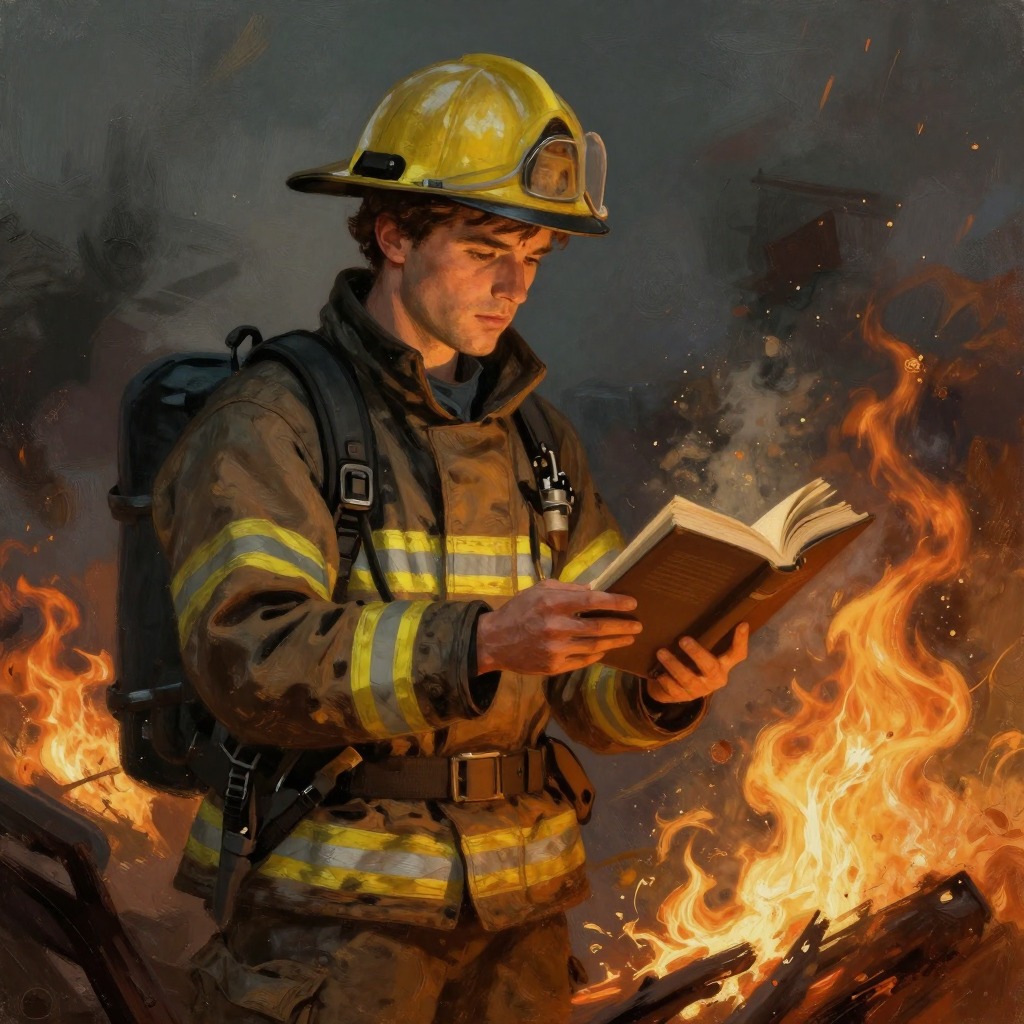
The Bible is the most significant physical book in Ray Bradbury's Fahrenheit 451, functioning as the primary object of Guy Montag's theft, the catalyst for his intellectual awakening, and the final repository of cultural memory he carries into the wilderness. It is the book Montag steals during the burning of the old woman's library, the text he desperately tries to memorize on the subway, and the volume he entrusts to Professor Faber before his flight. In the novel's final movement, the Bible transforms from a forbidden artifact into a living text, as Montag becomes the embodiment of the Book of Ecclesiastes within Granger's wandering community of book-people.
Theft and Discovery
Montag first encounters the Bible as a physical object during the raid on the old woman's house, where a book "alighted, almost obediently, like a white pigeon, in his hands, wings fluttering" . This moment of involuntary theft—his hand acting "with a brain of its own"—marks the beginning of his rebellion. The Bible later appears as the specific volume Montag reveals to his wife Mildred when he pulls back the ventilator grille in his hallway, dropping "some twenty books" at her feet, among them "the Old and New Testament" . Montag identifies it as "the last copy in this part of the world" , a claim that underscores its rarity and value in a society that burns books.
Attempted Memorization and the Sieve
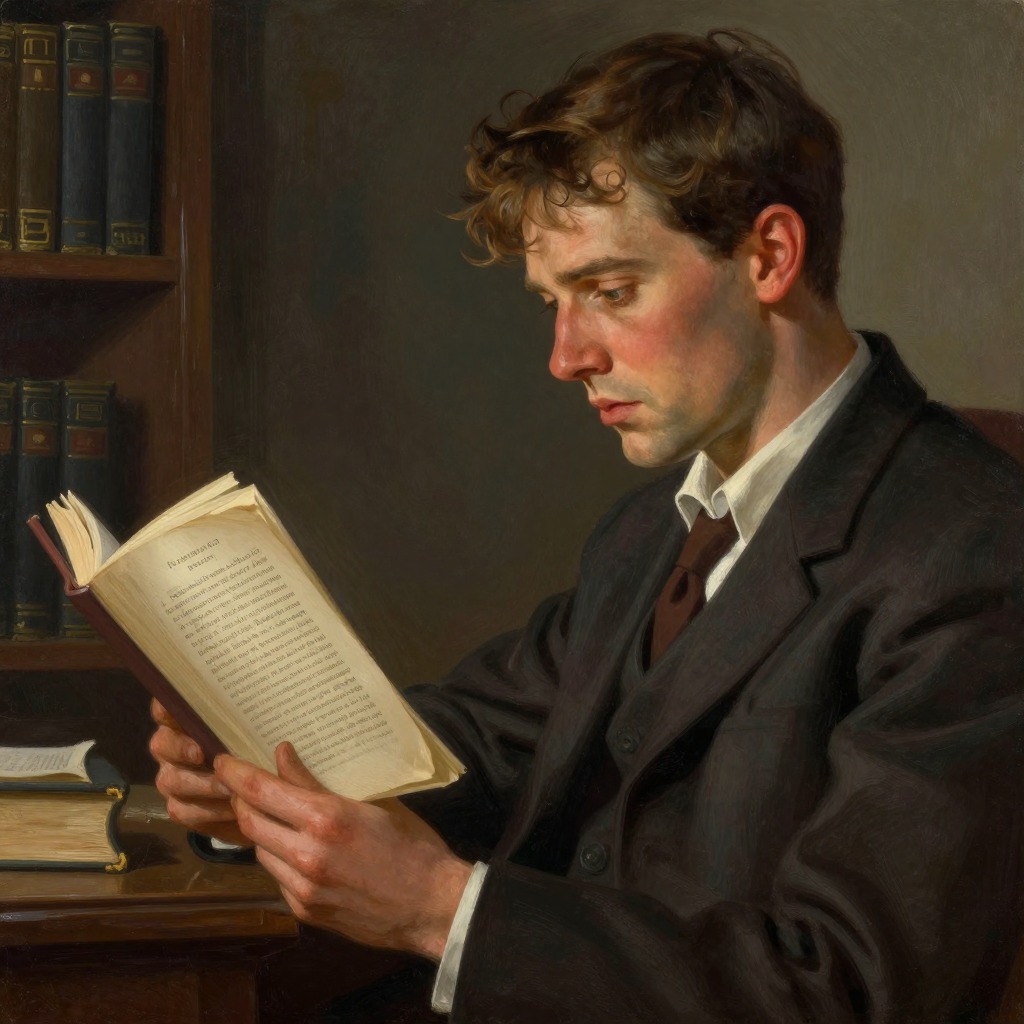
The Bible becomes the focus of Montag's desperate attempt to internalize knowledge before he must surrender it to Captain Beatty. On the subway, he holds the Bible open, trying to read fast enough to memorize its contents, but the words "fell through" his mind like sand through a sieve . This scene directly echoes his childhood memory of trying to fill a sieve with sand on a beach, and the advertising jingle "Denham's Dentifrice" repeatedly interrupts his concentration, forcing him to shout "Shut up, shut up, shut up!" at the other passengers . The passage he struggles to retain is from the Sermon on the Mount: "Consider the lilies of the field" (E00810-E00821), a verse about trust and providence that contrasts sharply with the mechanical, consumerist world of the subway.
Transfer to Faber
Montag brings the Bible to Professor Faber's house, where the old man receives it with reverence. Faber turns the pages, stopping to read, and remarks, "It's been a long time. I'm not a religious man. But it's been a long time" . He smells the book, noting that "books smell like nutmeg or some spice from a foreign land" . In a dramatic gesture to force Faber's commitment, Montag begins tearing pages from the Bible, crumpling them, and only stops when Faber cries out, "Don't, oh, don't!" (E00917-E00918). Montag then places the Bible in Faber's hands, saying, "Here. I'll chance turning in a substitute" . Faber later reads from the Book of Job into the green bullet radio, whispering the words into Montag's ear as he walks through the night .
Memory and Preservation
After Montag kills Beatty and escapes the city, he discovers that he has lost the exact words of the Bible. When Granger asks what he has to offer, Montag replies, "Nothing. I thought I had part of the Book of Ecclesiastes and maybe a little of Revelation, but I haven't even that now" . Granger responds with profound reassurance: "Nothing's ever lost. We have ways to shake down your clinkers for you" . Montag is told that if anything should happen to another man named Harris of Youngstown, who carries the Book of Ecclesiastes, Montag himself "are the Book of Ecclesiastes" . This transformation from reader to living text is the culmination of Montag's journey.
Final Recitation and Thematic Significance
In the novel's closing pages, as the group walks north after the bombing of the city, Montag feels "the slow stir of words, the slow simmer" . He thinks of the passage from Ecclesiastes: "To everything there is a season. Yes. A time to break down, and a time to build up. Yes. A time to keep silence and a time to speak" . Then he recalls the final verses of Revelation: "And on either side of the river was there a tree of life, which bare twelve manner of fruits, and yielded her fruit every month; And the leaves of the tree were for the healing of the nations" . Montag decides this is the passage he will save for noon, "when we reach the city" (E01566-E01567). The Bible thus moves from a stolen object to a memorized text to a promise of renewal, its final image of healing leaves directly countering the destructive fire with which the novel began.